


Significant Figures
- Year
- 2019
- Client
- Royal society of chemistry
- Agent
- Folio Art
Significant Figures
- Year
- 2019
- Client
- Royal society of chemistry
- Agent
- Folio Art
From 2019 to 2022, for Chemistry World, the magazine of the Royal Society of Chemistry — chemists history pushed aside, most often women.
The overlooked of chemistry
Significant Figures is a series of portraits. Each month, Chemistry World — the magazine of the Royal Society of Chemistry — told the story of a chemist whose discoveries had been forgotten, downplayed, or credited to someone else: most often a woman, sometimes a man from a minority background.
The brief was to draw, around each portrait, a frame built from that person's science — the molecules they named, the structures they solved, the formulas attributed to others.
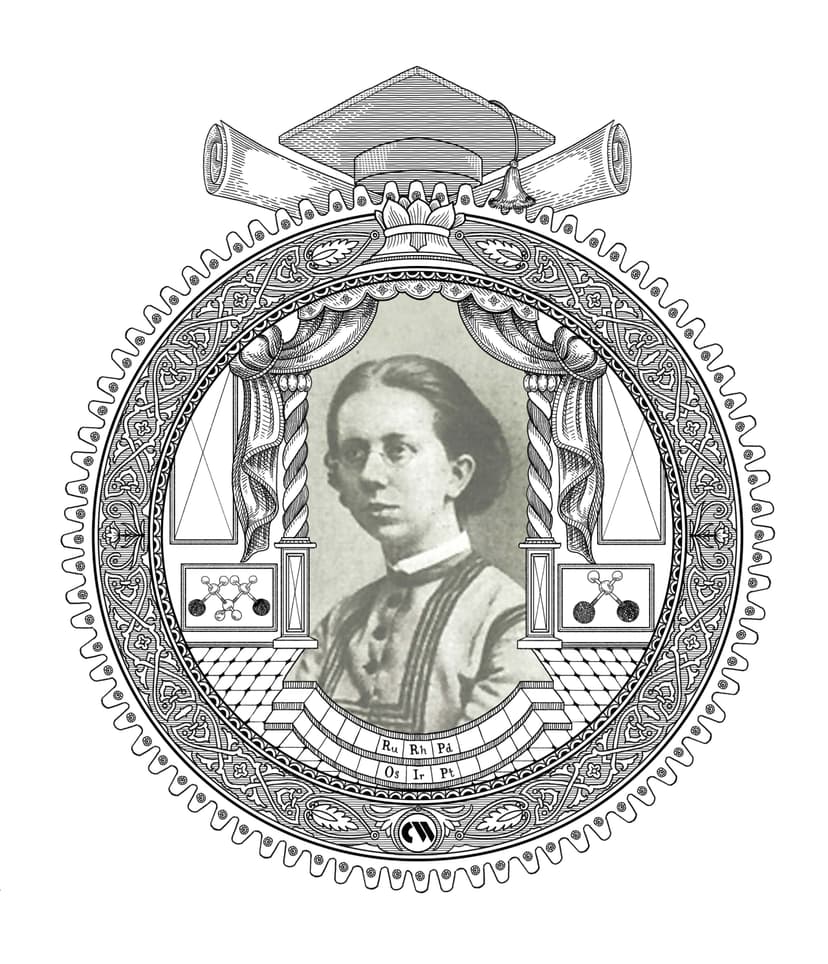
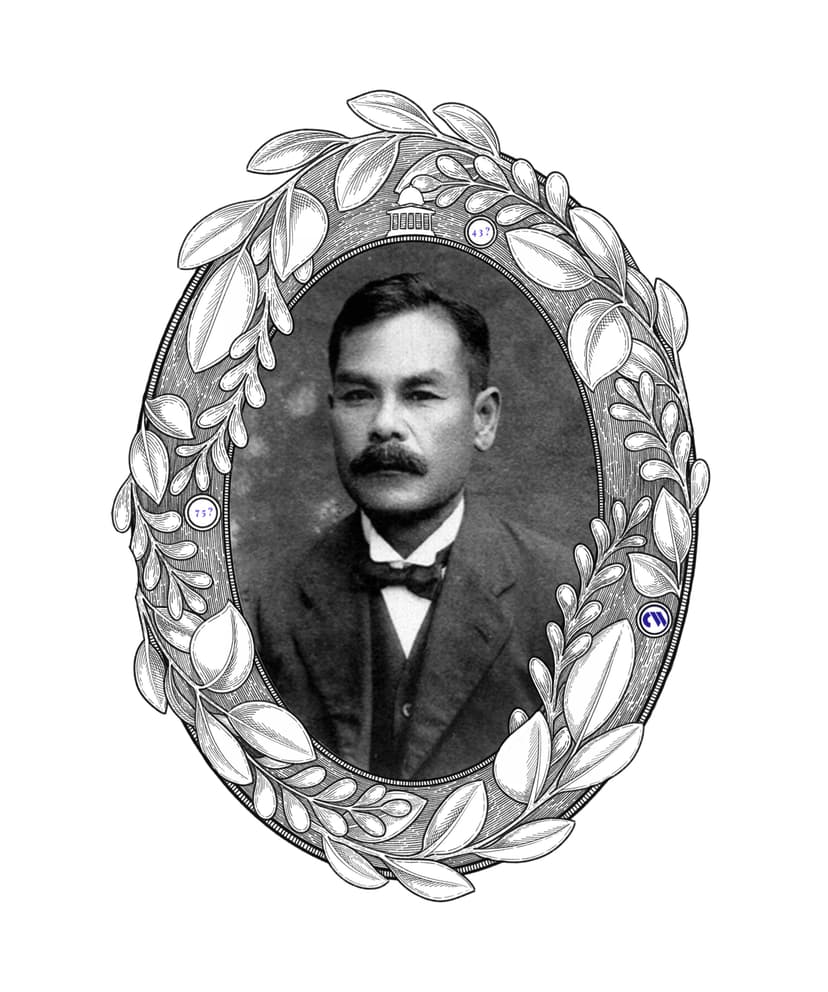
A monthly commission for Chemistry World
The Royal Society of Chemistry is a learned society founded in 1841, housed at Burlington House since the nineteenth century. Chemistry World, its magazine, has a circulation of more than fifty thousand. The series ran from 2019 to 2022, month after month, in black and white.
From one end of the series to the other, we kept the same rule: a portrait at the centre, an ornamental frame around it, two colours. A choice held from one month to the next, all the way to the last. What changed was the person — and with them another discipline, another era, another erasure.
The frame as document
Within each border, Margot drew the elements particular to the subject: a compound folded into a scroll, a molecular structure slipped into a frieze, a fragment of biography turned into motif. The frame stops being decoration. It becomes the person's record — what they did, condensed into the ornament that surrounds them.
This is where engraving finds its true purpose. The fine line, the crosshatched shading, the Victorian density: these techniques know how to hold a great deal of information in a small space. Here they serve to inscribe an entire body of work within a border.
What you don't see at first glance
Part of the drawing eludes the first glance, and that is deliberate: the formula folded into a vine, the diagram passing for an arabesque — you have to stop to see them. That slowing of the eye echoes those who were long kept at the edge of history, and who come into view only when you return to them — their frames, too, ask to be read twice.

Three years with Chemistry World
Over three years, the series stopped being a sequence of commissions and became a collaboration. Month after month, the same people and the same underlying work: an archive to read, a life to understand before drawing. The relationship with the Chemistry World team was built on that regularity, and with it a trust — the kind that lets each monthly portrait become an act of repair, returning to each of these figures the place history had denied them.